High-Performance vs Standard Stretch Film: Which One Fits Your Packaging Needs?

High Performance and Standard Stretch Films

In the world of packaging and logistics, stretch film plays a crucial role in securing products during storage and transportation. While it might seem like a simple material at first glance, not all stretch films are created equal. For businesses looking to improve load containment, reduce material costs, and boost packaging efficiency, the choice between standard and high-performance stretch film can make a significant difference.

In this article, we’ll explore the key differences, explain how stretch film machines factor in, and help you determine which type of film best fits your operation.

Understanding Standard Stretch Film

Standard stretch film—also referred to as conventional stretch wrap—is the traditional option used in many manual and semi-automated applications. It’s designed to stretch a certain amount under tension and then hold tight to keep pallet loads stable.

Common Characteristics:

  • Thickness usually ranges from 60 to 120 gauge
  • Typically used in lower-volume or light to medium-duty applications
  • Can be applied by hand or with a stretch film wrapping machine
  • Often less expensive upfront compared to high-performance options

Standard films offer reliability and familiarity, especially for operations that don’t require extreme load containment or high wrapping speed. However, they do come with limitations in terms of performance, stretchability, and cost-efficiency over time.

What Makes High-Performance Stretch Film Different?

High-performance stretch film is engineered using advanced resins and extrusion technologies that give it enhanced stretch, holding force, and durability—without necessarily increasing its thickness.

Key Benefits:

1. Greater Load Retention with Less Film

High-performance films are designed to stretch more without breaking, allowing you to wrap the same load using significantly less material. This reduces not only film costs but also plastic waste.

2. Thinner but Stronger

Despite being thinner, high-performance films often outperform standard ones in strength. This is thanks to advanced formulations that improve puncture resistance and tear strength.

3. Better Performance at High Speeds

For businesses using stretch film machines, high-performance films can run more efficiently at faster speeds, making them ideal for automated and high-throughput environments.

4. Improved Load Integrity

Because of their superior elasticity and cling properties, these films provide more consistent containment, especially during transport.

5. Sustainability

Many high-performance films support sustainability goals by reducing material usage and improving recyclability.

How Stretch Film Wrapping Machines Affect Performance

The performance of any stretch film—whether standard or high-performance—depends significantly on how it’s applied. This is where the stretch film machine or wrapping equipment comes into play.

Machine Type Matters

Manual Wrapping:

  • Suitable for small volumes and standard film
  • Operator-dependent, with potential for inconsistent wrap tension

Semi-Automatic Machines:

  • Can work with both standard and high-performance films
  • Offer better tension control and consistency

Fully Automatic Machines:

  • Work best with high-performance stretch films
  • Allow for faster speeds and optimal film stretch ratios
  • Maximize material efficiency and load stability

Matching the right film with the right machine ensures you get consistent results and maximize the film’s potential. Using high-performance stretch film on a compatible machine can significantly reduce wrap time and improve throughput.

When Should You Choose High-Performance Stretch Film?

Not every operation needs high-performance film, but for many, it’s worth considering if you:

  • Wrap more than 20–30 pallets per day
  • Use a stretch film wrapping machine or are planning to invest in one
  • Have varied or heavy loads requiring stronger containment
  • Want to reduce film usage or meet sustainability goals
  • Are looking to cut long-term packaging costs despite a slightly higher upfront investment

Working with the Right Stretch Film Supplier

Whether you’re exploring standard options or transitioning to high-performance solutions, choosing a reliable stretch film supplier is key. A knowledgeable supplier can help you analyze your wrapping process, recommend the best film type, and ensure compatibility with your equipment.

Look for suppliers that:

  • Offer a wide range of film grades and gauges
  • Can assist with load testing and stretch ratio optimization
  • Understand both manual and machine applications
  • Provide support in reducing film waste and improving cost-efficiency

A good supplier doesn’t just sell film—they help you wrap smarter.

Final Thoughts

Choosing between standard and high-performance stretch film isn’t just about upfront costs—it’s about understanding your operation, load types, equipment, and long-term goals. While standard film remains a solid choice for light-duty and manual applications, high-performance options offer greater efficiency, strength, and sustainability—especially when paired with the right stretch film machine.

As the demands of packaging and logistics continue to evolve, more businesses are realizing that investing in better materials leads to better results.

Hand Wrapping vs. Stretch Wrapping: Optimizing Stretch Film Use

Hand Wrapping vs Stretch Film Wrapping Comparison

When it comes to securing pallet loads, the method you choose matters. It affects not just how well your goods are protected, but also how efficient and cost-effective your operation can be. Two common approaches are hand wrapping and stretch wrapping, each with their own pros and cons depending on your business needs.

In this guide, we’ll break down the differences between the two, explain when each makes the most sense, and offer practical tips to help buyers get the most out of their stretch film, whether you’re using a manual dispenser or a more automated system.

What Is Hand Wrapping?

Hand wrapping is a manual process where stretch film is applied to a pallet by hand—often with the help of a dispenser to make things easier and more consistent. It’s a widely used method, especially in smaller operations or when wrapping fewer pallets per day.

Why Some Businesses Prefer It:

  • Minimal upfront cost
  • No electricity or machinery required
  • Easy to use and set up in tight spaces or temporary packing zones

That said, hand wrapping can vary in effectiveness depending on how it’s applied. With the right technique and tools—such as a stretch film dispenser—it’s possible to achieve consistent wraps while minimizing strain on the user.

As with any manual process, results can differ based on experience, but many operations continue to rely on hand wrapping effectively, especially when paired with the right setup and training.

What About Stretch Wrapping?

When people refer to stretch wrapping, they’re often talking about using a semi-automatic or fully automatic machine to apply stretch film around a pallet. These machines are designed to wrap consistently and quickly with minimal manual labor.

Where It Excels:

  • Maintains consistent film tension and application
  • Speeds up the wrapping process significantly
  • Reduces physical strain on workers
  • Can lead to long-term savings through efficient film usage

Stretch wrapping machines are a bigger investment up front, but they’re often worth considering for businesses wrapping dozens of pallets daily or looking to scale.

Comparing Hand Wrapping vs. Stretch Wrapping

Here’s a side-by-side overview to help you evaluate which might suit your operations better:

Aspect

Hand Wrapping

Stretch Wrapping

Speed

Slower, manual pace

Fast and automated

Consistency

Depends on user skill

Consistent and repeatable

Labor Effort

Physically demanding

Low effort

Cost

Low initial cost

Higher initial investment

Best For

Lower volumes, irregular loads

High volumes, standard loads


Making Hand Wrapping More Efficient

If you’re using hand wrapping and want to get better results, there are a few key areas to focus on.

1. Choosing the Right Hand Roll Stretch Film

Not all stretch films are created equal. Consider the following:

  • Thickness (Gauge): Thicker films handle heavier loads, while thinner options may be more cost-effective for lighter items.
  • Pre-stretched Film: Requires less force to apply, which can reduce fatigue and improve consistency.
  • Clarity and Stickiness: High clarity helps with scanning and load checks. Some films have cling on one side to prevent pallets from sticking together.

2. Using a Stretch Film Dispenser

A dispenser helps control film tension, reduces strain on the user, and speeds up the process. It’s a simple tool that can make a big difference—especially if you’re wrapping multiple pallets a day.


When Stretch Wrapping Machines Make Sense

If you’re wrapping a lot of pallets daily—let’s say more than 15 to 20—it might be time to look at semi- or fully automatic machines. They reduce physical strain, save time, and help cut down on film waste by applying just the right amount every time.

Machines aren’t always the answer for every operation, but they’re worth evaluating as part of a long-term growth plan—especially if consistency and speed are becoming bottlenecks.

Best Practices for Using Stretch Film Effectively

Regardless of whether you’re wrapping by hand or using a machine, following a few key best practices can significantly improve your results. It all starts at the base—anchoring the film securely to the bottom of the pallet helps stabilize the load and ensures the wrap holds everything tightly in place during transport.

As you work your way up the pallet, maintaining a consistent overlap—ideally around 50%—is important. This ensures that each layer reinforces the one before it, helping to create a secure and uniform wrap across the entire load. For those using standard stretch film (as opposed to pre-stretched film), applying a slight amount of stretch during the wrap process activates the film’s memory, which improves containment and tension.

It’s also worth noting that using more film doesn’t always translate to better protection. Over-wrapping can lead to unnecessary material usage without improving load stability. In fact, applying too many layers can sometimes cause issues, such as film bunching or product crushing. Striking a balance between enough coverage and efficient usage is key.

Lastly, no matter which method or tools you’re using, proper training plays a vital role. Ensuring that your team understands correct wrapping techniques can lead to more consistent results, reduce material waste, and prevent injuries from repetitive strain. With the right knowledge and equipment—such as a quality stretch film dispenser—even manual hand wrapping can become a reliable and cost-effective part of your packaging process.

Final Thoughts

Choosing between hand wrapping and stretch wrapping depends on a few key factors: your daily volume, available space, labor capacity, and long-term goals.

Hand wrapping offers flexibility and lower upfront costs, while stretch wrapping provides speed and consistency for growing operations. And for those somewhere in between, improved manual tools can help make the most out of your existing workflow.

Whatever your setup, optimizing your stretch film use—whether through better materials, tools, or techniques—can have a noticeable impact on efficiency, cost control, and overall packaging quality.

Plastic Flexible Packaging Solutions for Industrial Applications

plastic flexible packaging industry equipment

In today’s industrial landscape, packaging is more than just a container—it’s a critical part of your supply chain. From protecting goods during transport to supporting operational efficiency, the right packaging solution can make a big difference. One of the most widely used and effective options is plastic flexible packaging.

Known for its strength, adaptability, and cost-efficiency, flexible packaging is used across industries like manufacturing, food processing, agriculture, and logistics. This guide will walk you through what plastic flexible packaging is, the different types available, why it’s beneficial, and how to choose the right format for your industrial needs.

What Is Plastic Flexible Packaging?

Plastic flexible packaging refers to any non-rigid packaging made from plastic film, sheet, or laminate. It easily conforms to the shape of the product and comes in formats like bags, pouches, wraps, and film rolls.

Common Materials Used:

  • Polyethylene (PE) – A highly flexible, moisture-resistant material commonly used in plastic bags, liners, and film.
  • Polypropylene (PP) – Offers better heat resistance and clarity, often used in food-grade films.
  • Multilayer Laminates – Combine different materials for added strength and barrier protection, often used in high-performance industrial packaging.

These materials are selected based on the specific needs of the product—whether that’s load protection, product freshness, or compatibility with packaging machinery.

Types of Plastic Flexible Packaging Used in Industry

Industrial packaging demands strength, efficiency, and adaptability. Here are some of the most commonly used plastic flexible packaging types designed to meet various needs:

1. Flat Plastic Bags

  • Side Seal Bags – Lightweight and suitable for general-purpose packaging.
  • Bottom Seal Bags – Offer better load-bearing strength for heavier items.
  • Gusseted Bags – Provide extra capacity for bulk or irregularly shaped products.

2. Rollstock Film

Rollstock is continuous plastic film on a roll, used with automated form-fill-seal (FFS) machines. It is widely used for high-speed packaging lines and supports both vertical and horizontal configurations.

3. Stretch Hood Film

Stretch hood films are used to secure goods on pallets. They stretch over the load and contract to hold it tightly in place. This method is efficient, protective, and improves load stability without the need for heat.

4. Shrink Film

Shrink film is loosely applied and then heated to shrink tightly around the product. It’s a great choice for bundling multiple items or covering oddly shaped products during storage or shipping.

5. Heavy-Duty Industrial Bags

For demanding applications—like packaging chemicals, fertilizers, or hardware—heavy-duty plastic bags offer high strength, tear resistance, and durability. These are designed to handle tough conditions while maintaining product integrity.

Advantages of Plastic Flexible Packaging in Industrial Operations

Flexible packaging offers several benefits over rigid alternatives, making it a smart choice for industrial use:

1.    Lightweight & Cost-Efficient

Flexible plastic packaging is much lighter than rigid packaging, which reduces transportation costs and fuel usage. It also lowers handling time and labor requirements.

2.    Space-Saving Design

Because it can be rolled or flattened, flexible packaging takes up less space in storage and shipping, helping optimize warehouse capacity.

3.    High Durability

Industrial-grade films and bags are engineered to resist punctures, tears, and environmental exposure, making them reliable for heavy or sharp products.

4.    Customizable for Different Needs

From thickness and barrier properties to printing and sizing, flexible packaging can be tailored to suit a variety of industrial applications.

5.    Machine Compatible

Many formats are optimized for automated packing machines such as FFS or vacuum sealers, which improves packaging speed and consistency.

6.    Eco-Friendly Options

Options like downgauged (thinner but stronger) film, recyclable mono-materials, and lower material usage contribute to sustainability goals.

Common Use Cases Across Industrial Sectors

Plastic flexible packaging is used in nearly every industrial setting. Here are a few examples of where it makes a strong impact:

1. Manufacturing and Engineering Components

In manufacturing, there are countless small parts—like screws, bolts, bearings, or electronic parts—that need to be safely packed and organized. Flexible plastic bags make it easy to sort, label, and protect these items.

For more sensitive components such as electronic chips or metal parts, special types of plastic bags are used. These include:

  • Packaging for small components such as bolts, bearings, and machine parts

  • Corrosion-resistant and anti-static plastic bags for sensitive electronics or metal items

2. Food Processing and Distribution

The food industry relies heavily on flexible packaging for both bulk storage and final product distribution. Common applications include:

  • Bulk ingredient bags: These are used to pack large quantities of dry goods like flour, sugar, grains, and spices for commercial kitchens or manufacturers.

  • Heat-sealed or vacuum-sealed film: Used for processed foods like frozen meals, meats, or ready-to-cook items. These films help keep food fresh for longer and protect against contamination.

3. E-Commerce and Logistics

Flexible plastic packaging plays a major role in the e-commerce and logistics sectors, where efficiency, protection, and presentation are important. Common uses include:

●       Polybags and mailers: Lightweight yet durable, these are used to ship clothing, accessories, electronics, and small goods. They’re easy to seal and label.

●       Stretch hood film and pallet wrap: These are used to secure large shipments on pallets. They help prevent movement during transit and protect goods from dust, dirt, and moisture in storage or transport.

Key Factors to Consider When Selecting Flexible Packaging

When selecting the right type of plastic flexible packaging for your operations, consider the following:

1. Product Type and Handling

  • Is the item heavy, sharp, irregular in shape, or sensitive to moisture or air?
  • Will it be packed manually or through automated systems?

2. Protection Requirements

  • Consider the need for barriers against moisture, oxygen, light, or chemical exposure.
  • For food or pharmaceutical use, compliance with safety and hygiene standards is critical.

3. Machine Compatibility

  • Ensure your packaging film or bags are suitable for your filling equipment—whether FFS, vacuum sealers, shrink tunnels, or stretch hood machines.

4. Branding and Labeling

  • Is printing or branding needed for batch tracking or inventory management?

  • Custom prints, barcodes, and material finishes can be included for both functional and branding needs.

5. Storage and Transport Conditions

  • Will the product be stacked, palletized, or exposed to temperature extremes during shipping?
  • Select packaging with adequate strength and flexibility to withstand these conditions.

6. Sustainability Goals

  • Consider recyclable materials or films with post-consumer recycled content.
  • Downgauging (using thinner film) can also reduce material usage while maintaining strength.

Conclusion

Plastic flexible packaging plays an essential role in industrial supply chains. With options like rollstock, pallet film, shrink wrap, and heavy-duty bags, it provides a reliable and efficient way to store, protect, and ship goods across various industries.

By understanding the packaging types, material options, and performance characteristics, you can choose a solution that fits your operational needs, supports sustainability, and boosts efficiency.

Whether you’re packing food ingredients, machine parts, chemicals, or bulk goods, flexible packaging delivers the protection and performance required in today’s industrial world.

Enhancing Product Appeal: The Role of Shrink Film in Consumer Goods Packaging

shrink film on water bottles

In the competitive world of consumer goods, packaging plays an important role in influencing purchase decisions. It is not just about protecting the product; it is about making a lasting impression on customers.

Today, shrink film has become a versatile and effective solution for packaging, especially in enhancing product appeal. From visual impact to branding opportunities, here is a detailed look at how shrink wrap packaging contributes to the success of consumer goods.

1. Visual Impact

The visual appeal of a product on the shelf is often the first factor that catches a customer’s eye. Shrink wrap provides a clean, glossy finish that enhances the look of the product. It hugs the contours of the item, creating a sleek and professional appearance. This is particularly valuable for products like beverages, where shrink wrap for bottles ensures labels and designs are prominently displayed.

Transparent shrink film also allows customers to view the product while keeping it securely enclosed. This combination of protection and visibility boosts consumer confidence and increases the likelihood of purchase. The aesthetic enhancement offered by shrink wrap packaging ensures products stand out in a crowded marketplace.

2. Protection and Freshness

Shrink wrap acts as a protective barrier, shielding products from external factors such as moisture, dust, and contaminants. This is especially important for food and beverage items, where freshness and safety are key priorities. By sealing products tightly, shrink film preserves their quality during storage and transportation.

Moreover, shrink wrap for bottles provides added durability to prevent spills and leaks. It is a trusted option for protecting fragile or perishable goods, offering both manufacturers and consumers peace of mind. In a world where product safety is of utmost importance, shrink wrap packaging delivers reliability without compromising on visual appeal.

3. Branding Opportunities

Effective branding is a must for creating a lasting impression and improving customer loyalty. Shrink wrap packaging serves as a powerful tool for demonstrating a brand’s identity. Customizable with vibrant graphics, logos, and text, shrink film transforms packaging into a canvas for storytelling.

For example, shrink wrap for bottles can feature intricate designs that match a brand’s messaging, which makes products instantly recognizable. This customization not only increases brand visibility but also conveys a sense of quality and attention to detail. With shrink wrap, businesses can differentiate their products and connect with consumers on a deeper level.

4. Cost Efficiency

Cost efficiency is a major consideration in any packaging strategy, and shrink wrap excels in this regard. The material is lightweight yet durable, reducing shipping costs and material waste. Its ability to conform to various shapes and sizes minimizes the need for additional packaging components.

Furthermore, shrink wrap packaging can be applied using automated machinery to streamline production processes and reduce labor costs. This efficiency allows businesses to achieve high-quality packaging without stretching their budgets. For small and large-scale operations alike, shrink film offers an economical solution that does not compromise on performance or aesthetics.

5. Consumer Perception

Packaging directly influences how consumers perceive a product and the brand behind it. Shrink wrap creates a sense of sophistication and care, showing customers that the product is worth their investment. Its ability to maintain a product’s best condition throughout its journey to the store shelf reinforces trust and satisfaction.

In addition, shrink wrap packaging contributes to the unboxing experience—an important factor in today’s consumer-driven market. The ease of removing shrink film without damaging the product inside enhances the overall impression, leaving customers with a positive feeling about their purchase.

For example, beverages wrapped with shrink wrap for bottles offer convenience while emphasizing quality. They appeal to customers who value practicality and style in equal measure.

In Closing

Shrink wrap packaging is more than just a protective layer—it is a strategic asset in consumer goods packaging. From boosting visual appeal and safeguarding products to enabling cost-efficient operations and strengthening brand identity, shrink film plays an effective role in enhancing product appeal.

Through the adoption of shrink wrap solutions, businesses can meet the growing expectations of consumers while standing out in a competitive market. Regardless of whether it is for food, beverages, or other consumer goods, shrink wrap delivers value on multiple fronts, making it an indispensable choice in modern packaging strategies.

Enhance your product with shrink film packaging for better branding, protection, and cost efficiency. Contact us today for a custom solution!

Bolt Duo Solves Wrapping Challenges with Effortless Precision

Bolt Duo - dual-core compatible stretch film dispenser

In the fast-paced world of logistics and packaging, efficiency isn’t just a goal—it’s a necessity. 

However, for businesses that rely on hand wrapping, the process often presents challenges: inconsistency, inefficiency, and operator fatigue. 

Operators have had to compromise for years—either use tools with limited core sizes or forego tools altogether.

This has led to uneven wraps and strained workers at the end of a shift, which in turn has led to wrapping inconsistencies that may affect load containment. 

Enter Bolt Duo, the game-changing solution designed to eliminate these challenges and bring effortless precision to every wrap.


The Challenge of Wrapping Without Support

Without the right tools, hand wrapping is a gruelling process.

Fatigue is a Daily Reality: Workers often experience muscle strain and exhaustion, especially during long wrapping shifts. This leads to decreased productivity and potential health concerns over time.

Inconsistencies in Wraps: Without a tool, achieving consistent tension and coverage is nearly impossible, leading to wasted film, unstable loads, and damaged goods during transit.

Limited Core Compatibility: Many dispensers cater exclusively to either 1-inch or 2-inch cores, forcing businesses to invest in multiple tools or switch dispensers mid-shift—a frustrating and inefficient process.

For businesses that prioritise efficiency, sustainability, and worker well-being, these issues create an unnecessary bottleneck in operations.

The Solution: Meet Bolt Duo

Bolt Duo is more than just a tool—it’s a revolution in hand wrapping. By addressing the root of these challenges, it redefines how operators approach daily wrapping tasks.

What is Bolt Duo Hand Wrapping Solution in short?

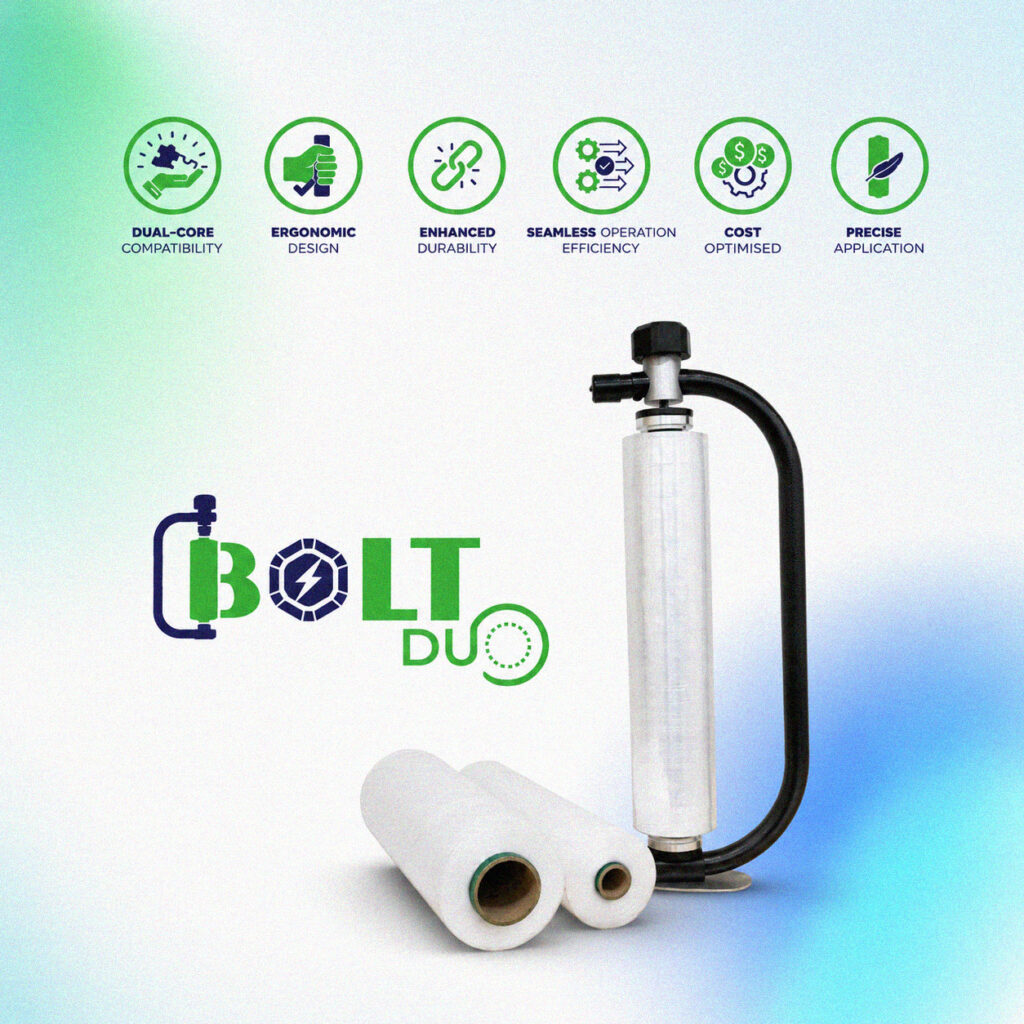
Bolt Duo is a fatigue-fighter stretch film dispenser with dual-core compatibility, fit for our 1 or 2-inch prestretch film cores.

1. Dual-Core Compatibility: Versatility at Its Finest

Gone are the days of juggling multiple dispensers. 

Bolt Duo seamlessly adapts to both 1-inch and 2-inch cores, empowering operators to switch between film types without downtime or extra equipment. 

Whether you’re working with lightweight loads or heavy-duty applications, Bolt Duo has you covered.

2. Built for Comfort: The Fatigue Fighter

Ergonomically designed, Bolt Duo reduces strain during use, even for extended shifts. 

Its lightweight structure and smooth grip make wrapping effortless, transforming a once-tiring task into a seamless experience. 

Operators can focus on consistency without worrying about exhaustion or discomfort.

3. Consistency Without Compromise

Bolt Duo ensures precise tension and coverage with every wrap, minimising film wastage and improving load stability. 

The result? Less time spent correcting errors and more confidence in the security of your shipments.

4. Cost-Effective and Sustainable

By reducing film waste and optimising efficiency, Bolt Duo not only saves costs but also supports sustainability goals. 

Its dual compatibility means fewer tools are needed, simplifying inventory and reducing production impact.

The Bolt Duo Advantage

The Bolt Duo's Advantages - USPs

With Bolt Duo in hand, businesses unlock a host of benefits.

Enhanced Productivity: Operators can wrap faster, more consistently, and with less strain.

Reduced Downtime: Dual-core compatibility eliminates the need for tool changes, streamlining operations.

Improved Worker Satisfaction: A fatigue-free experience boosts morale and encourages long-term efficiency.

Minimised Waste: Precision wrapping ensures every roll is used to its full potential.

A New Era of Hand-Wrapping

Bolt Duo is more than a tool—it’s a promise of consistency, efficiency, and comfort. 

For businesses striving to elevate their packaging operations, it represents a step forward in both innovation and sustainability. 

Say goodbye to the struggles of manual wrapping and hello to a solution designed to empower your team and protect your bottom line.

Are you ready to transform your wrapping process? Experience the difference with Bolt Duo.

The Rise of Shrink Wrap Packaging in Malaysia’s Manufacturing Landscape

Shrink Wrap Packaging Manufacturing Malaysia

Shrink wrap packaging has become an important component in Malaysia’s manufacturing landscape, driven by changing market demands and innovations in packaging technology. With its versatile applications and cost-effective advantages, shrink wrap has gained traction across various industries, becoming an indispensable solution for industrial packaging.

In this article, we will walk you through the factors contributing to its rise, the challenges faced, and its promising future in Malaysia’s manufacturing sector.

Increasing Demand for Industrial Packaging

Malaysia’s manufacturing sector has witnessed a significant surge in demand for industrial packaging solutions. This demand is largely fueled by the need for efficient and reliable packaging that ensures product safety during transportation and storage.

Shrink wrap, with its ability to securely encase products of various shapes and sizes, has become a preferred choice for manufacturers. Its transparency and durability further enhance its appeal, offering protection against external elements while maintaining product visibility.

Flexible packaging manufacturers in Malaysia have been quick to capitalize on this trend, introducing advanced shrink wrap solutions tailored to meet various industry needs. These innovations have enabled businesses to optimize their packaging processes, reduce material waste, and improve overall efficiency.

The Shift Towards Sustainable Packaging

Sustainability has become an important consideration in the packaging industry, with manufacturers and consumers alike seeking eco-friendly alternatives. Shrink wrap packaging has evolved to align with this shift, incorporating recyclable materials and biodegradable options. Local flexible packaging manufacturers are at the forefront of this transformation, developing shrink wrap solutions that minimize environmental impact without compromising on quality or performance.

In Malaysia, the adoption of sustainable packaging is further driven by regulatory pressures and consumer preferences. Companies are increasingly investing in research and development to create packaging materials that meet stringent environmental standards, ensuring compliance while enhancing their market competitiveness.

Economic and Operational Advantages

The economic benefits of shrink wrap packaging are another key factor contributing to its widespread adoption. Compared to traditional packaging methods, shrink wrap offers cost savings through reduced material usage and lower transportation expenses. Its lightweight nature and compact design allow for efficient storage and handling, translating into significant operational efficiencies for manufacturers.

Additionally, shrink wrap’s adaptability makes it suitable for a wide range of applications, from food and beverage to electronics and pharmaceuticals. This versatility has positioned it as a go-to solution for businesses looking to streamline their packaging processes and achieve better value for money.

Innovations in Shrink Wrap Technology

Technological advancements have played a crucial role in enhancing the functionality and appeal of shrink wrap packaging. In Malaysia, local manufacturers are leveraging cutting-edge technologies to produce high-performance shrink films that cater to specific industry requirements. For instance, nano stretch films and mono films are gaining popularity due to their superior strength and sustainability attributes.

These innovations are not only addressing the growing demand for sustainable packaging but also enabling businesses to differentiate their products in an increasingly competitive market. By offering customized solutions, flexible packaging manufacturers are helping companies enhance their brand image and build consumer trust.

Challenges in the Shrink Wrap Market

Despite its numerous advantages, the shrink wrap packaging industry in Malaysia faces certain challenges. The global supply-demand imbalance, coupled with fluctuating raw material prices, has put pressure on manufacturers to maintain profitability. Moreover, the uncertain macroeconomic environment, characterized by high interest rates and geopolitical tensions, adds to the complexity of operating in this sector.

However, industry players are optimistic about the future, citing signs of gradual recovery and increased buying activity. Local manufacturers are particularly well-positioned to thrive, thanks to their ability to offer innovative and cost-effective solutions that cater to the changing needs of their clients.

The Role of Export Markets

Export markets play a significant role in driving the growth of Malaysia’s shrink wrap packaging industry. Many local manufacturers benefit from the weaker ringgit, which makes their products more competitive on the global stage. This advantage has enabled them to capture market share from overseas competitors, particularly in developed markets where production costs are higher.

The demand for industrial packaging solutions in export markets further highlights the importance of maintaining high-quality standards and adopting sustainable practices. Malaysian manufacturers are increasingly focusing on these aspects to strengthen their position in the global supply chain.

Future Prospects for Shrink Wrap Packaging

The future of shrink wrap packaging in Malaysia looks promising, with several factors pointing towards sustained growth. The increasing emphasis on sustainability, coupled with advancements in packaging technology, is expected to drive further innovation and adoption in the coming years. Local manufacturers are likely to continue playing a pivotal role in shaping the industry, leveraging their expertise and resources to meet the dynamic needs of their clients.

Moreover, the ongoing recovery in demand, as evidenced by improved buying activity and better market sentiment, bodes well for the industry. Flexible packaging manufacturers are poised to capitalize on these opportunities, delivering solutions that combine functionality, cost-effectiveness, and environmental responsibility.

In a Nutshell

Shrink wrap packaging has firmly established itself as a key player in Malaysia’s manufacturing landscape. Its versatility, economic benefits, and alignment with sustainability goals make it an ideal choice for businesses across various sectors. As the industry continues to evolve, driven by technological advancements and changing consumer preferences, shrink wrap is set to play an even more significant role in shaping the future of industrial packaging in Malaysia.

Local manufacturers, with their innovative approaches and commitment to quality, are well-equipped to lead this transformation, ensuring that Malaysia remains at the forefront of the global packaging industry.

Choosing the Right Industrial Plastic Packaging Manufacturers for Your Business Needs

stretch wrap plastic packaging applied to pallet

Selecting the ideal industrial plastic packaging partner is a must for businesses aiming to protect their products, streamline operations, and uphold brand quality. With numerous options in the market, understanding what to look for in plastic packaging manufacturers can save you time, money, and potential setbacks. Below, we outline the key considerations to ensure you find a trusted partner that matches your needs.

1. Know Your Specific Packaging Requirements

Before approaching plastic packaging suppliers, identify your specific requirements. Consider the type of products you need to package, their dimensions, weight, and any particular storage or transport conditions. For instance, fragile or temperature-sensitive goods might require customized solutions that only certain plastic packaging companies can offer.

Additionally, think about branding elements such as logos or unique packaging designs. A manufacturer with advanced customization capabilities will better support your efforts to create impactful packaging that resonates with your audience.

2. Prioritize Quality and Compliance Standards

The quality of industrial packaging has a direct impact on the integrity and safety of your products. When evaluating plastic packaging manufacturers, enquire about the materials they use and their adherence to international quality standards.

It is equally important to ensure the manufacturer complies with relevant regulations, such as food-grade packaging requirements if you operate in the food industry. Transparency in compliance demonstrates the manufacturer’s commitment to producing reliable and safe packaging solutions.

3. Evaluate Manufacturing Capabilities and Scalability

Not all plastic packaging suppliers have the same production capabilities. Confirm that the manufacturer you choose can meet your volume requirements consistently, especially if your business experiences seasonal demand fluctuations.

Additionally, assess their scalability. As your business grows, you will want to collaborate with a partner capable of accommodating increased order sizes without compromising quality or delivery timelines.

4. Check Technological Expertise and Innovation

The packaging industry evolves rapidly, with technological advancements playing a significant role in driving efficiency and sustainability. Leading plastic packaging companies often invest in modern machinery and innovative techniques, which enable them to deliver superior products.

Look for manufacturers that offer solutions such as sustainable packaging, lightweight materials, or reusable options. This not only aligns with sustainability goals but can also enhance your brand reputation among eco-conscious consumers.

5. Review Lead Times and Delivery Reliability

Time is an important factor in any supply chain. Ensure the manufacturer you choose has a proven track record of meeting deadlines. Reliable plastic packaging suppliers will have efficient processes in place to minimize delays and ensure timely delivery, allowing your operations to run smoothly.

Discuss lead times upfront and verify their capacity to handle unexpected spikes in demand. A dependable supplier can significantly reduce logistical challenges and improve overall efficiency.

6. Compare Costs Without Compromising Quality

While cost is an important consideration, it should not come at the expense of quality. Request detailed quotations from multiple plastic packaging manufacturers and compare their offerings.

Analyze what each quotation includes, such as material type, customization options, and additional services like design support or logistics. Opting for the lowest price might seem tempting, but it could lead to higher costs in the long run if the packaging fails to meet your standards.

7. Sustainability Practices Matter

As environmental concerns grow, many businesses are adopting greener practices. Partnering with plastic packaging companies that prioritize sustainability can help you achieve your eco-friendly goals.

Enquire about their recycling programs, use of recycled materials, and eco-friendly production methods. Choosing a supplier with sustainable practices reflects positively on your brand while contributing to broader environmental efforts.

8. Examine Track Record and Reputation

A manufacturer’s experience and reputation speak volumes about their reliability. Research their history, clientele, and any reviews or testimonials available.

Plastic packaging suppliers with a solid track record of serving well-known brands are often more dependable. Additionally, consider asking for references to gain firsthand insights into their performance and customer service.

9. On-Site Visits and Factory Inspections

Whenever possible, arrange a visit to the manufacturer’s facility. Observing their operations firsthand allows you to assess their production capabilities, cleanliness, and overall efficiency.

A reputable manufacturer will welcome your visit and provide transparent information about their processes. This step can also help you identify potential risks or areas of concern before committing to a partnership.

10. Flexibility and Customization Options

Every business has unique packaging needs, and flexibility is key to meeting them. Ensure that the manufacturer can accommodate custom designs, material preferences, and specific requirements.

Plastic packaging companies that prioritize customer-centric solutions will work closely with you to create packaging that aligns with your brand’s identity and functional demands.

11. Customer Support and Communication

Strong communication and customer support are essential for a successful partnership. Make sure the plastic packaging manufacturer you choose has a responsive team ready to address your queries and provide updates on your orders.

A company that values clear communication will be more likely to accommodate your needs, troubleshoot potential issues, and cultivate a productive working relationship.

12. Long-Term Partnership Potential

Building a long-term relationship with a reliable packaging supplier can bring significant benefits to your business. A trusted partner will understand your preferences and needs, allowing them to offer tailored solutions and adapt to changing requirements over time.

Look for manufacturers that show a willingness to invest in the success of your business. A collaborative approach boosts mutual growth and ensures a smoother experience for both parties.

Final Takeaways

Choosing the right industrial plastic packaging manufacturer requires research and careful consideration. From assessing their capabilities and sustainability practices to reviewing their track record and customer support, every factor plays a role in determining the best fit for your business.

Through partnering with dependable plastic packaging suppliers, you can secure high-quality solutions that enhance your product’s appeal, protect its integrity, and strengthen your brand’s position in the market. Take the time to evaluate your options, and you will be well-equipped to make an informed decision that supports your business goals.